



 メニュー
メニューVÆRIDION is building the Microliner, a 100% electric passenger and cargo aircraft that integrates its batteries directly into the wing for maximum structural and aerodynamic efficiency. Behind that design is a steady stream of high-fidelity CFD, and the team’s Flight Physics group uses Tecplot 360 and PyTecplot to make sense of it all.
About the Microliner
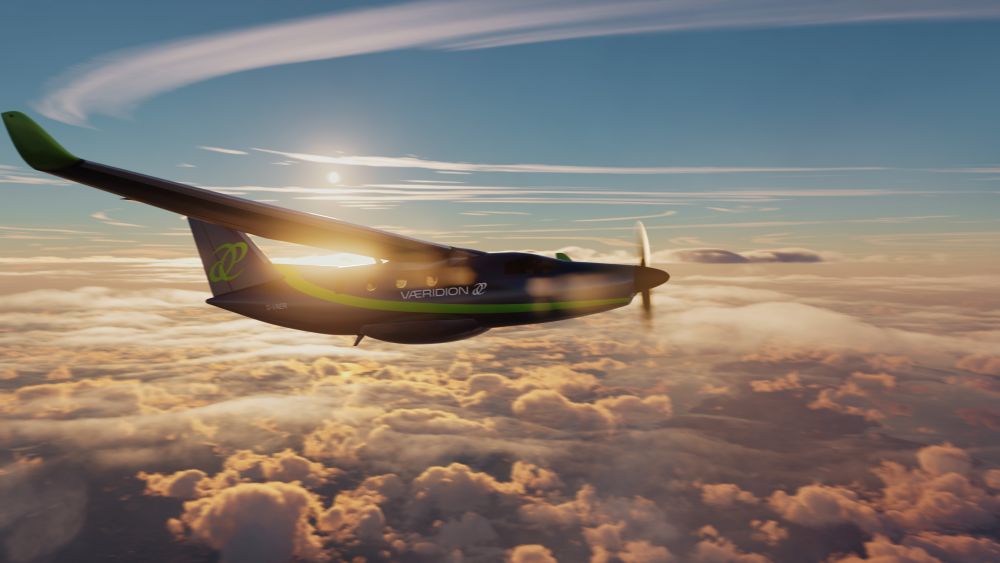
The Microliner is built for clean and affordable mobility on regional and underserved routes. It is an eCTOL aircraft designed to carry up to nine passengers over 400 km under IFR conditions, meeting the operational and sustainability goals of regional airlines.
Rather than adapting an existing platform, VÆRIDION is pursuing a clean-sheet airframe design optimized end to end for battery-electric propulsion. A defining feature of that design is the integration of the batteries into the wing, which lets the team pursue a very high aspect-ratio or glider-like wing. That geometry is what unlocks the aerodynamic efficiency the Microliner needs to hit its target range and mission profiles. The company’s development work centers on three areas: platform-agnostic battery packs, a multi-engine single-propeller propulsion system, and the airframe itself.
The Challenge
Since the Microliner’s range depends heavily on aerodynamic efficiency, the team brings high-fidelity CFD into the development cycle as early as possible. The Flight Physics team simulates a comprehensive range of geometries and permutations in both 2D and 3D, building models up incrementally from an isolated wing to full configurations that add the fuselage, fairings, empennage, flap and control surface gaps, and the propeller system.
Their quantities of interest span aerodynamic efficiency, stability and control characteristics, flow separation behavior, loads, and local flow phenomena tied to performance and handling qualities. Examining all of that across the full flight envelope demands a post-processing environment built for speed, flexibility and automation.
Load Integration and Visualization in Tecplot 360
VÆRIDION runs RANS CFD with different commercial tools, and Tecplot 360 sits at the center of post-processing. As Aeroelasticity and Loads Engineer Mauricio Jentys puts it, “In practice, virtually no simulation result bypasses Tecplot.”
“In practice, virtually no simulation result bypasses Tecplot.”
Mauricio Jentys, VÆRIDION Aeroelasticity and Loads Engineer
One of the team’s most important numerical tasks is aerodynamic load integration. In Tecplot 360, they integrate pressure forces and shear stresses to compute force and moment contributions, primarily on lifting surfaces such as the wing and the horizontal and vertical tailplanes. Those loads are then projected into the relevant coordinate systems and packaged into comprehensive datasets that feed directly into the structures team’s analysis workflows. This is where post-processing becomes part of the design process rather than a step after it, with results from Tecplot 360 driving decisions at the aircraft level.
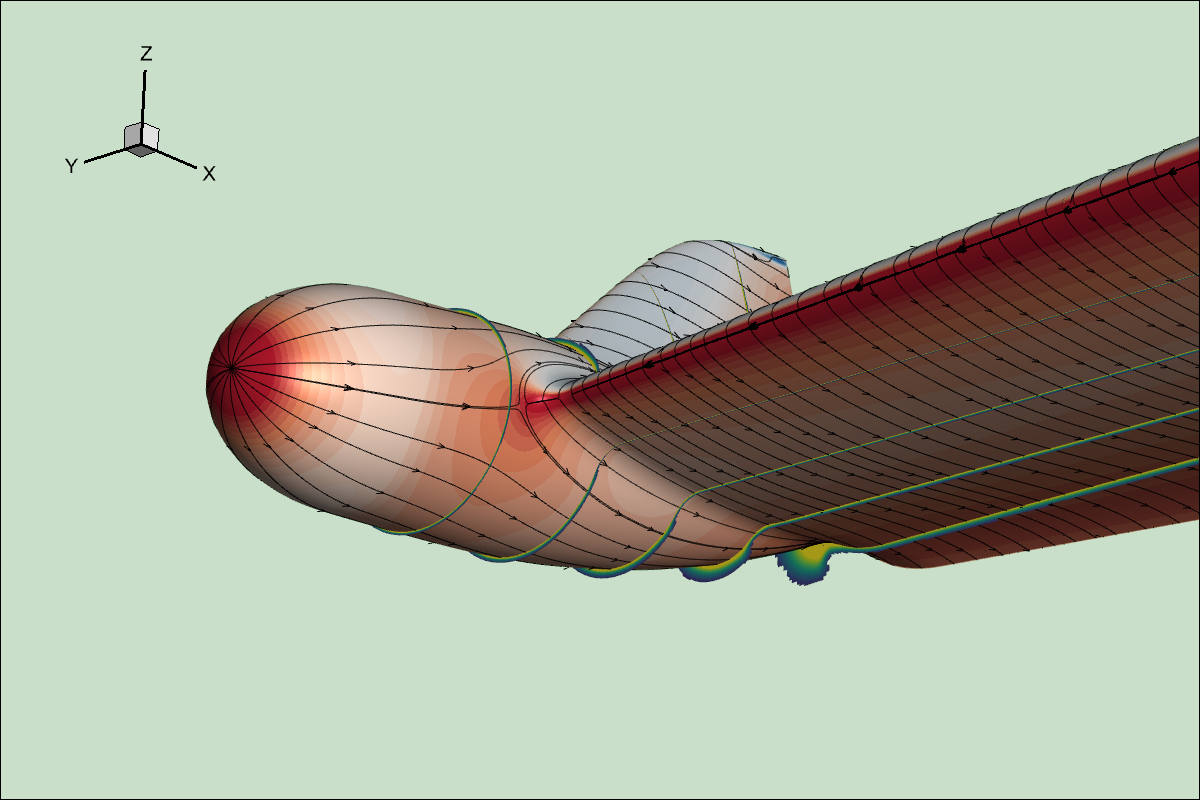
On the visualization side, the team layers surface contour plots of pressure and shear stress with flowfield velocity and pressure contours on cut planes. Streamtraces are a particular favorite: velocity streamlines and skin-friction lines that reveal how the flow behaves across the airframe. These are heavily used during outer mold line optimization and when characterizing the Microliner at critical points throughout its flight envelope, including the work of tuning stall behavior toward benign, safe handling qualities.
“Understanding stall behavior and tuning the aircraft to exhibit benign and safe handling characteristics would be significantly more resource and time intensive without the modern visualization capabilities offered by Tecplot 360,” says Jentys. That early insight lets the team de-risk much of the design ahead of the wind tunnel test campaign planned for early next year.
Automating the Workflow with PyTecplot
The biggest efficiency gains come from automation. Because the CFD and meshing tools used by the team and Tecplot 360 all expose Python APIs, VÆRIDION orchestrates its entire aerodynamic toolchain through Python, with PyTecplot handling post-processing.
A clear example is the generation of aerodynamic load datasets across the complete flight envelope. Python scripts automatically set up correct boundary conditions and parameter permutations and pass them to the solver. Once the runs finish, PyTecplot steps in for automated load integration and post-processing, all with minimal manual interaction. The effect is a closed loop rather than a handoff. Setup, solve, and post-processing run as one connected chain, so the insight from each batch of results feeds straight back into the next design iteration.
“A large portion of our post-processing routine is automated using PyTecplot, and these workflows have become an integral part of our daily engineering activities,” Jentys notes.
The Result
For VÆRIDION, Tecplot 360 and PyTecplot are central building blocks of the aerodynamic design process. “Tecplot has accompanied me throughout much of my career and continues to be my go-to tool for CFD post-processing,” says Jentys. “Its combination of visualization capabilities, numerical tools, and automation support enables us to iterate faster, shorten our development cycles, and make engineering decisions with greater confidence. It has become an indispensable part of our aerodynamic design process.”
Every simulation brings the Microliner one step closer to the runway, and to a future where clean, efficient regional flight is within reach. Curious what Tecplot 360 and PyTecplot could do for your team? Start a free trial of Tecplot 360.
About VÆRIDION
VÆRIDION is transforming regional air travel with the Microliner, a 100% electric aircraft designed to provide sustainable and cost-efficient air transport. Serving both passenger and cargo missions, the aircraft is intended for scheduled, semi-scheduled, and charter operations, enabling flexible deployment across a broad spectrum of mobility and logistics use cases. Headquartered in Munich, with subsidiaries in Delft and Brussels, VÆRIDION is developing an aircraft that carries up to 9 passengers or 10m3 of cargo over 400 km under IFR conditions, meeting the operational, economical and sustainability goals of operators. The clean-sheet design features a glider-inspired wing with integrated modular batteries, and a multi-engine, single-propeller propulsion system. The result? The most energy efficient aircraft in its class. No science fiction, just real, achievable, zero-emission travel by 2030. vaeridion.com